Every Ictuk letter has three ways you'll encounter it throughout this guide:
|
|
|
|
|
|
|
|
|
|
|
|
|
|
|
|
|
|
|
|
The only illegal sound combination in Ictuk is when the same consonant is next to another. Instead, only one of the consonants gets pronounced. For example, "tt" is just pronounced as "t".
All letter glyphs stem from zh, meaning every glyph's first stroke should be zh.
Before going on, you must be confident with the following goals:
Unlike English, Ictuk words can translate to a single English
word or to whole English phrases, but these words are
still seperated by a noticeable gap between glyphs.
Sha kofafashosh ("That is good")
Ictuk words vary greatly in length. Because Ictuk words are able to express full English phrases, some words may be longer than you expect.
Once you've memorized the sounds of the 15 glyphs, you can read and pronounce any written word even if you don't know its meaning.
You may have noticed that some glyphs appear more "compressed" with the others. This is simply to reduce visual space wherever possible, and does not change the meaning or pronunciation of the word.
Ictuk is both horizontal and vertical. Read each column from top to bottom before moving to the next column on the right.
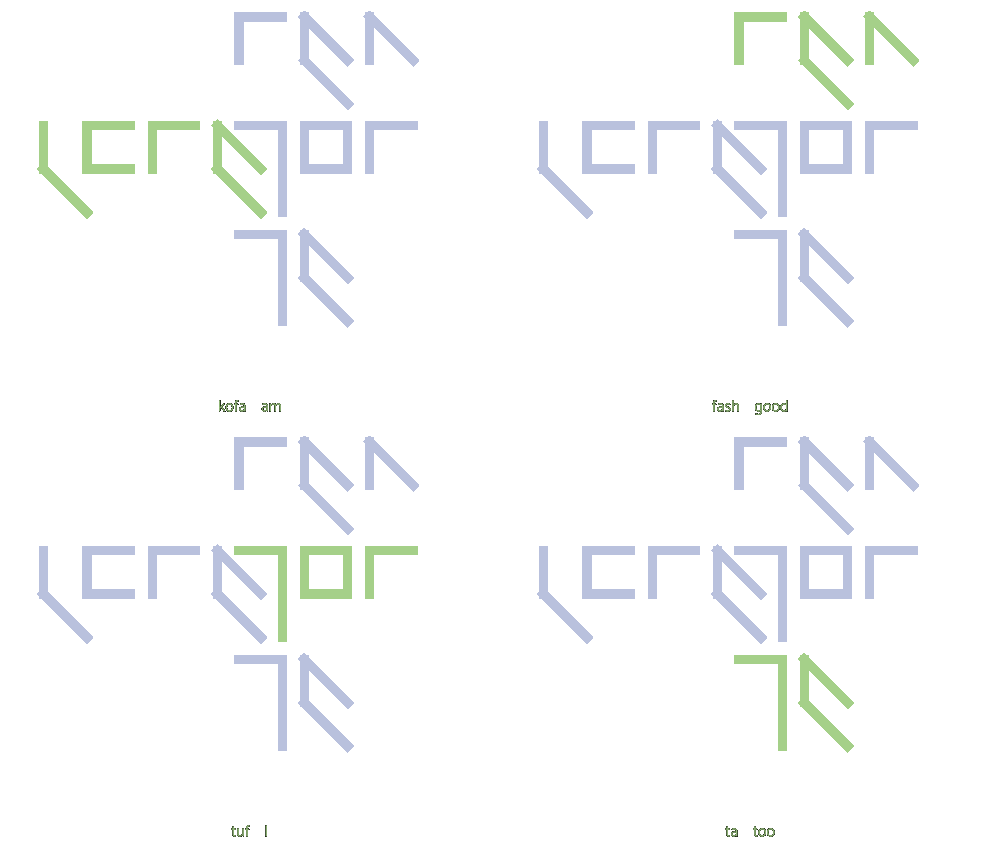
Ictuk can be written by hand or digitally. Both use the same writing system, though this guide uses the digital form for clarity.
Ictuk glyphs have no uppercase or lowercase; all glyphs are written in a single form.
Before going on, you must be confident with the following goals: