| Universe | Omi |
| System | Galus |
| Planet | Cetus |
| Species | Vemachia Sapiens |
| Nation | Suko |
This is a more technical sheet for Ictuk that can be used to reference certain rules and structures.
If this looks daunting and you would like more of an intro, I have created an intro sheet.
Interested in using this language with others?
Add "selisine" on Discord to get into the server!
| Alveolar | Velar | Bilabial | Velar | Glottal | Postalveolar | ||||||
|---|---|---|---|---|---|---|---|---|---|---|---|
| Mandibular | Probosocial | Probo-Pharyngeal | Mandi-Pharyngeal | Pharyngeal | Thoraxal | ||||||
| Plosive | t | k | p | b | ɓ | ɠ | kʼ | h | ʔ | ||
| Fricative | ɸ | ʃ | ʒ | ||||||||
| Close | u |
|---|---|
| Close-mid | o |
| Open-mid | ɔ |
| Open | ɑ |
There are a total of 15 letters in Ictuk. Ictuk's alphabetical order originates from how much the sound resonated with their head. The order is applied in this table, left to right, top to bottom.
| p | t | k | f | sh |
| zh | h | u | o | a |
| ou | b | ng | q | mb |
Stacking is an important part of speaking Ictuk. Stacking seperates
words into groups, where each group is pronounced left to
right, and each word in the group is pronounced top
to bottom.
Kofafashtufta ("I am good too")
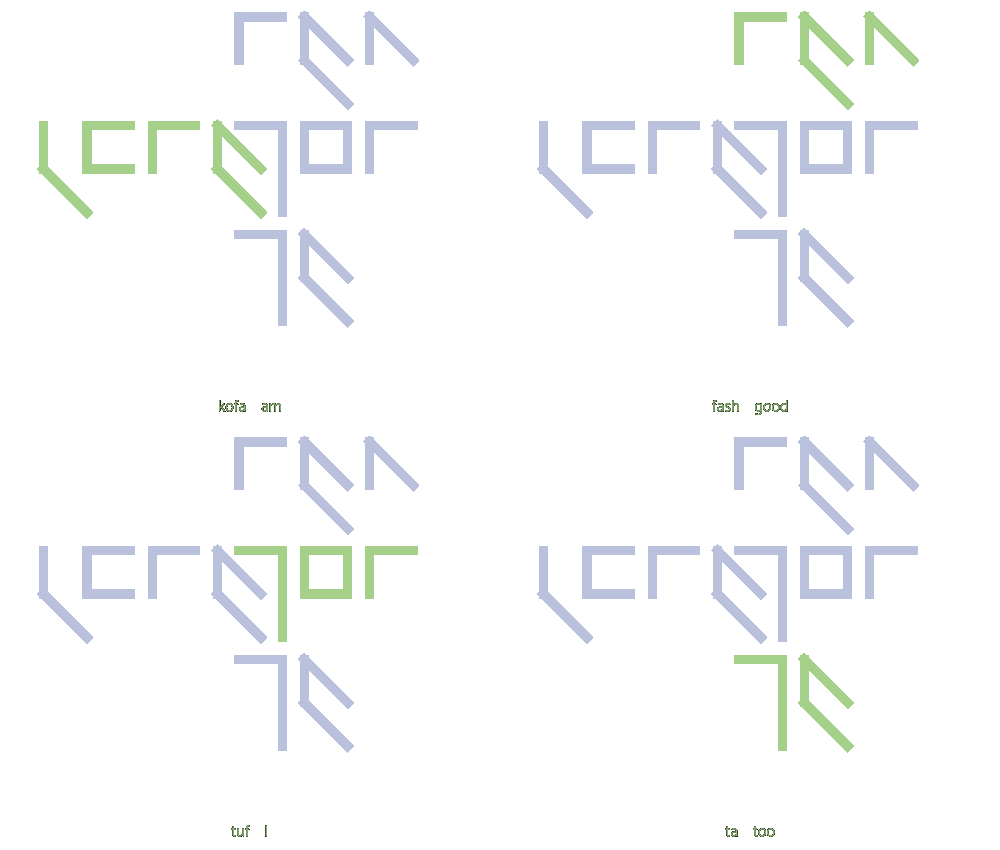
Half height glyphs are special in that they both can be placed next to the upper or lower half of a full-height glyph, and because they can be stacked on top of each other relative to the word they are apart of. Both are stylistic choices that are up to the writer.
Because Ictuk phrases are multiple levels, an invisible reference line
was established as the "center" of the word or phrase,
known as the primary line. It's typically where a noun
or pronoun is.
In this case, the primary line is where kofa ("be")
and tuf ("I") is, because tuf is the pronoun in
the phrase.
Sometimes, words can overlap past the word they're stacking on or under. A spacer glyph can be added until the word is no longer overlapping. There is a short spacer glyph and a long spacer glyph.
Punctuation can be stacked on itself to amplify its meaning.
Period
The period can be placed wherever it fits best, as
long as it remains on the primary line and doesn't
obstruct other glyphs.
Kofafashtufta. ("I am good too.")
The question mark follows the same rules as the period.
Kofafashbuta? ("Are you good too?")
The exclamation has to align with the center of the primary
line.
"Kofafashtufta! ("I am good too!")
The comma follows the same rules as the exclamation point.
Kofafashtuf, aa but? ("I am good, and you?")
The starting quote is stacked above the first glyph in
the quoted phrase, and the ending quote is stacked below
the last glyph in the quoted phrase.
"Kofafashtuf", ofazhpapfashoqposh. ("'I am good', they said.")
Parenthesis appear on every line of the word or phrase
they are encapsulating. Both parenthesis have to align with the
center of the line they are on.
Kofaakozhobtuf (ofazhokofazhobtuf) ("I'm tired (I didn't sleep)")
If 2 of the same consonants are right next to each other, it becomes one consonant.
| Zhoubbut (WRONG) | Zhoubut (RIGHT) |
This applies to stacked letters as well, except the consonants stay as they are, and only the pronunciation changes to one consonant.
If 2 vowels are right next to each other, the
pronunciation changes, adding a glottal stop between the vowels.
Aa ("And")
The most common spacing between phrases that aren't stacked is
1 line, or more technically 125 pixels of space.
'Nguuhop kofabut shou apa?' Ofazhpapfashoqtuf. ("'How are you today?' I said.")
'Kofafashtuf,' Ofazhpapfashoqposh. ("'I'm good,' He said.")
Ictuza count in base 12, meaning every 12 numbers counted, it jumps one place. In English, we represent the 11 and 12 in Base 12 as A and B respectively.
Stacking OrderNumbers always stack above all other glyphs affecting the noun.
| o (0) | u (1) | po (2) | ush (3) |
| ak (4) | mba (5) | mbu (6) | fo (7) |
| fu (8) | zho (9) | kap (A) | sh (B) |
All tens are represented with a "q" before the ones place.
Q ("10")
Qak ("14")
For numbers above 1B, the number in the tens place
gets put in front of q, represented by one of
the base numbers. This applies to every following place above
the ones place.
Mbaqmba ("55")
All hundreds are reprented with "mbok" before the tens place.
Mbok ("100")
Akmbokmbaqmbu ("456")
All thousands are represented with "pazh" before the hundreds place.
Pazh ("1,000")
Popazhushmbokakqmba ("2345")
All ten thousands are represented with "ngpa" before the thousands
place.
Ngpa ("10,000")
Pongpaushpazhakmbokmbaqmbu ("23,456")
All hundred thousands are represented with "ngshop" before the ten
thousands place.
Ngshop
Pongshopushngpaakpazhmbambokmbuqfa ("234,567")
The order of a group is indicated with a number
and fazh stacked below the number.
Kofaufazhposh, kofapofazhtuf, kofaushfazhposhozh. ("He is in 1st, I am in
2nd, she is in 3rd.")
Adjectives are words that can describe nouns and pronouns. All adjectives stack on top of what they affect with no specific order. Kofafashtuf. ("I am good.")
Determiners in Ictuk describe a noun's relative quanity and definiteness. Both stack above and closest to the noun.
ArticlesArticles describe whether a noun is singular (cat), plural (cats), indefinite (a cat), and definite (the cat). Articles precede all other determiners.
| Singular | Plural | |
|---|---|---|
| Indefinite | u | uzh |
| Definite | tu | tuzh |
Tuonguhu ofazhkofanguhaposh. ("The teacher was boring.")
All comparisons are built on stacking opapa, for "more", on
top of the comparing adjective.
Kofaopapafashtuf shap but. ("I'm better (more good) than you.")
In a scenario that needs better comparisons than the original,
more can be stacked on as many times as needed.
Kofaopapafashtuf shap but, at kofaopapaopapafashposh shap tuf. ("I'm better (more
good) than you, but he's even better (more more good)
than me.")
Superlatives show that something has an attribute at its most extreme. They are constructed the same way as comparisons, but instead use the word opapazh ("most"). There can't be more than one "most" stacked on an adjective.
Adverbs are words that modify or affect verbs, and they
stack below the verb they affect at the lowest level.
Fazhoukfazhatatuf? ("Can I go too?")
Nouns are words that describe a person, place or thing.
Tuonguhu ofazhkofanguhaposh. ("The teacher was boring.")
Pronouns are words that replace nouns, usually used for something that has already been mentioned, or to mention a/the speaker(s).
Personal pronouns address the actor of the sentence, and are what attach to verbs. There are 8 personal pronouns in Ictuk.
| Singular | Plural | |||
|---|---|---|---|---|
| Type | Person | Thing | Person | Thing |
| 1st Person | Tuf | Tuzh | ||
| 2nd Person | But | Buzh | ||
| 3rd Person | Posh | Osh | Pozh | Ozh |
| 4th Person | Poshozh | Oshozh | Pozhozh | Ozhozh |
4th person, or 3rd person obviative, is very similar to
3rd person. It comes into play when talking about someone
less central to the story, like "He (1) thought his
(2) idea was good", where "his" is talking about someone
in the 4th person. While it isn't inherently required, Ictuk
lacks gender in its pronouns, which can make discernment from
context more difficult.
Ofazhnguhoposh ukposhozhnguho ofazhkofafashosh ("He (1) thought his (2) idea was good")
Pronouns can also be used as objects in sentences when
they're not the subject of the verb. They are the
same words as personal pronouns, which can be seen in
a phrase like "I am good, and you?".
Kofafashtuf, aa but? ("I am good, and you?")
Reflexive pronouns address the speaker themselves, and stack a copy
of the pronoun onto itself.
Akozhapofazhozhoubtuf osh tuftuf! ("I want to do it myself!")
| Singular | Plural | |||
|---|---|---|---|---|
| Type | Person | Thing | Person | Thing |
| 1st Person | Tuftuf | Tuzhtuzh | ||
| 2nd Person | Butbut | Buzhbuzh | ||
| 3rd Person | Poshposh | Oshosh | Pozhpozh | Ozhozh |
| 4th Person | Poshozhposhozh | Oshozhoshozh | Pozhozhpozhozh | Ozhozhozhozh |
Possessive pronouns are used to indicate the ownership of something or someone. In Ictuk, the word uk ("hook") is added to the top of the pronoun, then the full pronoun is added to the top of what is being possessed.
| Singular | Plural | |||
|---|---|---|---|---|
| Type | Person | Thing | Person | Thing |
| 1st Person | Uktuf | Uktuzh | ||
| 2nd Person | Ukbut | Ukbuzh | ||
| 3rd Person | Ukposh | Ukosh | Ukpozh | Ukozh |
| 4th Person | Ukposhozh | Ukoshozh | Ukpozhozh | Ukozhozh |
Demonstrative pronouns point to or identify things that already have context in the sentence. Ictuk has 6 demonstrative pronouns.
| Singular | Plural | |
|---|---|---|
| Near | Sho | Shozh |
| Far | Sha | Shazh |
| Abstract | Shou | Shouzh |
Abstract words in Ictuk are any intangible or conceptual object. Things like days, color, names, etc. would use shou or shouzh.
Prepositions help show the relationship between words in a sentence.
They stack on the highest point of the 2nd word
in the prepositional phrase.
Ofazhazhouktuzh atshaosh. ("We went through it.")
Verbs are synthesized in a particular way, as seen in this table.
| Structure | ||
|---|---|---|
| Aspect | Negation | |
| Tense | Root | Subject |
| Modal | ||
Aspect is how a verb extends through time. There are 4 aspects: simple, progressive, perfect, and perfect progressive. In Ictuk, 3 of these 4 aspects have a preposition that represents them.
Tense is when a verb happened. There are 3 tenses: present, past, and future.
Negation is when a verb isn't being done, like "not sleeping", and is represented with o.
The root is the action itself. Unlike English, there are no infinitives in Ictuk (e.g. "to sleep"). The auxilliary gets formatted in simple aspect and added to the front of the phrase, and the root gets formatted as progressive aspect.
For example, "I want to sleep" becomes akozhapofazhongukoshtuf ("I want
sleeping").
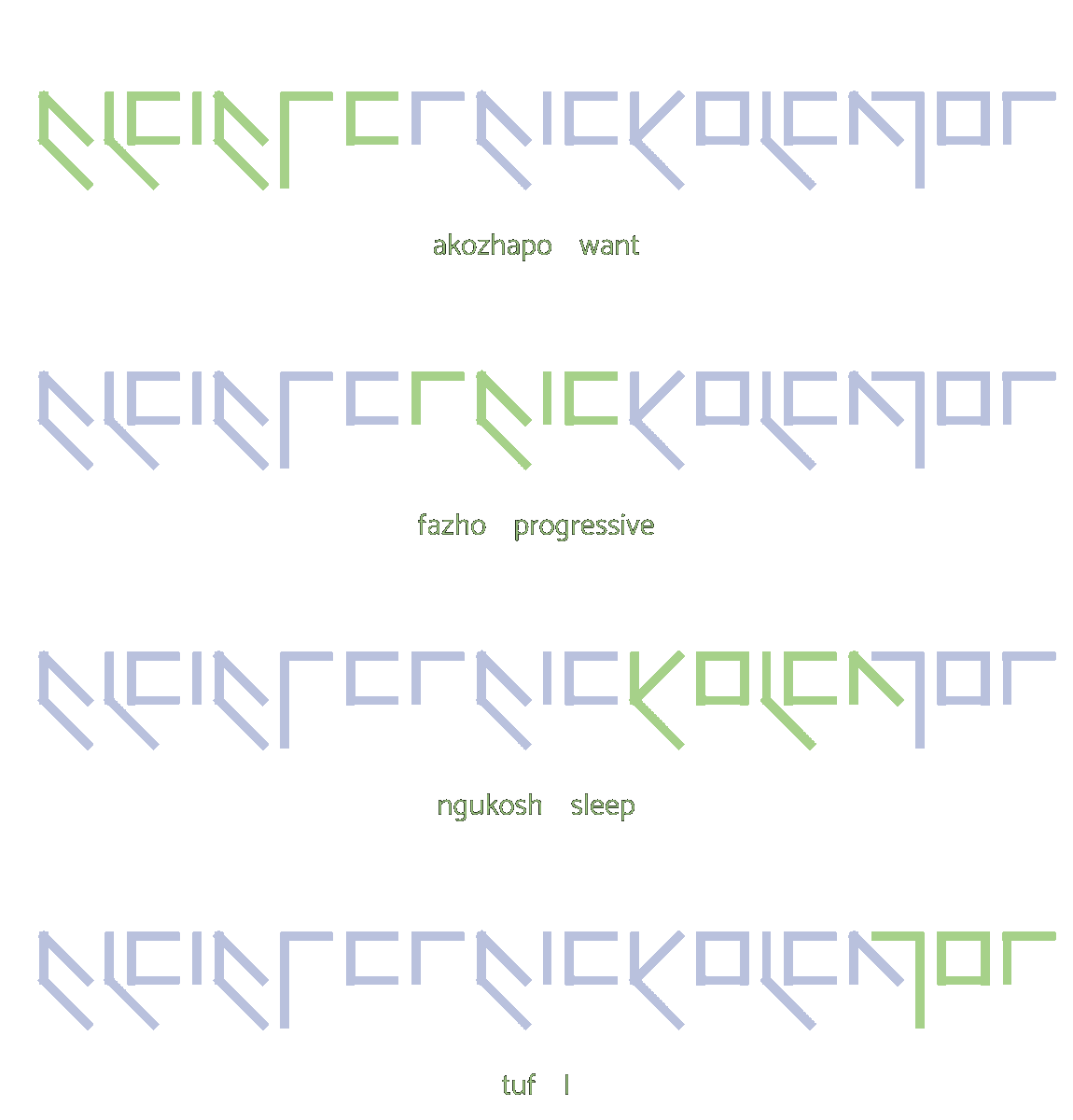
Modality is what conveys the mood of a sentence. There are 4 types in Ictuk:
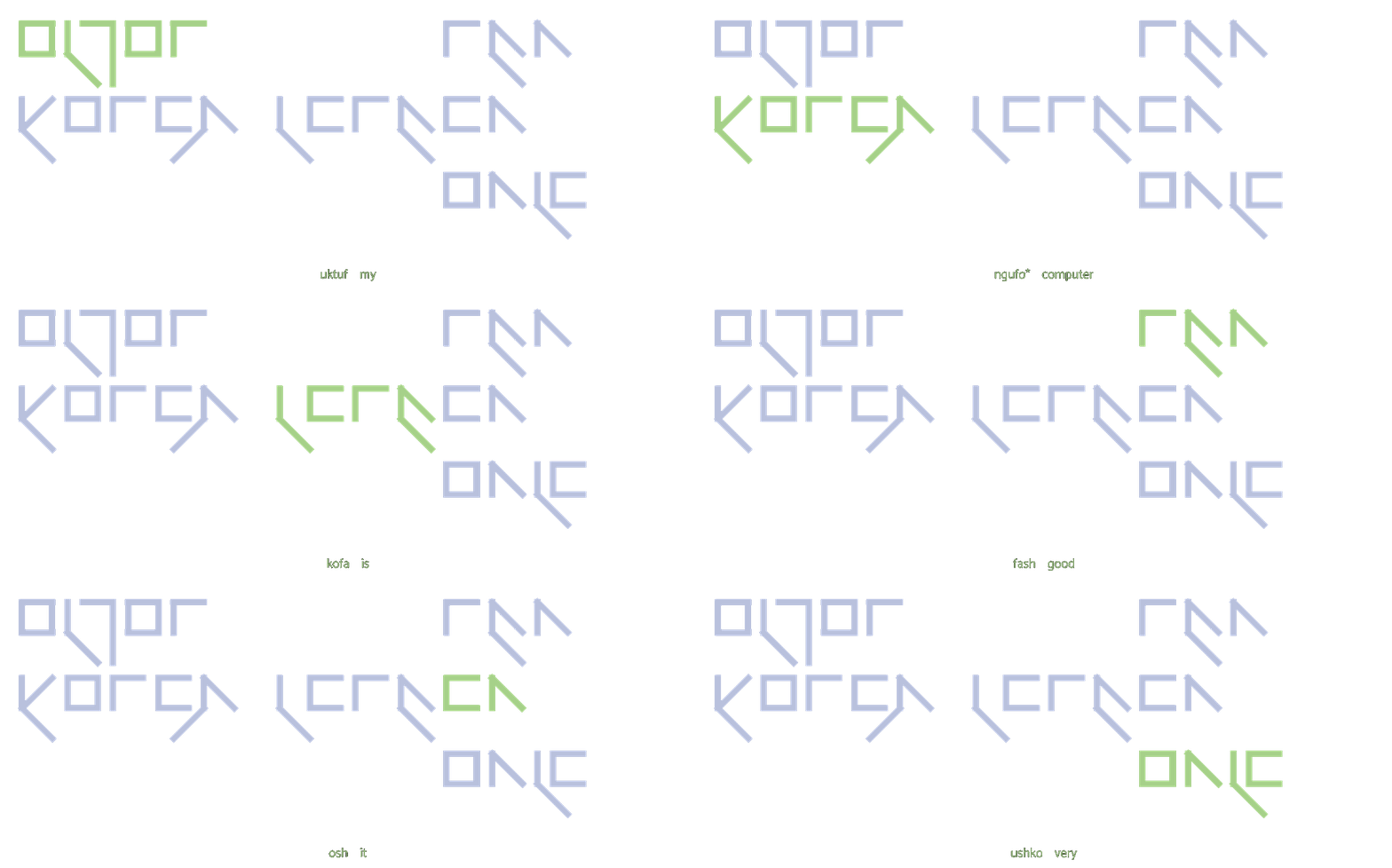
The subject is the actor of the verb, and is
always a pronoun. When regular nouns are being used (e.g.
"My computer is very good"), the noun stays seperate from
the verb, but the subject word changes according to the
noun.
Uktufngufoq kofafashoshushko ("My computer is very good")
Units of time can be modified to represent time that has passed or will pass, which uses the same structure as verb tenses: ofazh for the past and fazh for the future. The amount of time in this occurence is indicated by stacking a number on apa.
Colloquially, fazh can be stacked on top of fazhuouk ("almost")
to indicate how close or similar something is to its
approximation. There's not really a definitive measurement with how many
fazh's there are. The English equivalent to this is saying
"really really really (however many "really"'s) close".
Ofazhkofafazhfazhfazhfazhuoukposh, ofazhkofaushafoposh uaofazhapa. ("They were almost there, just a second away.")
Ictuk has 2 words to indicate reasoning: fazh for the factual or natural occurence of something (e.g. Ofazhukoshposh fazh ofazhoashoposh ("They died because they didn't eat")),
and fazhko for the conceptual or abstract reasoning of something (e.g. Ngushoofashtuf fazhko ngushoofashbut ("I feel bad because you feel bad")).